Squad Rotation Patterns and Resulting Shifts in Live Betting Markets Throughout English Divisions
Theo Günther · Aug 3, 2026
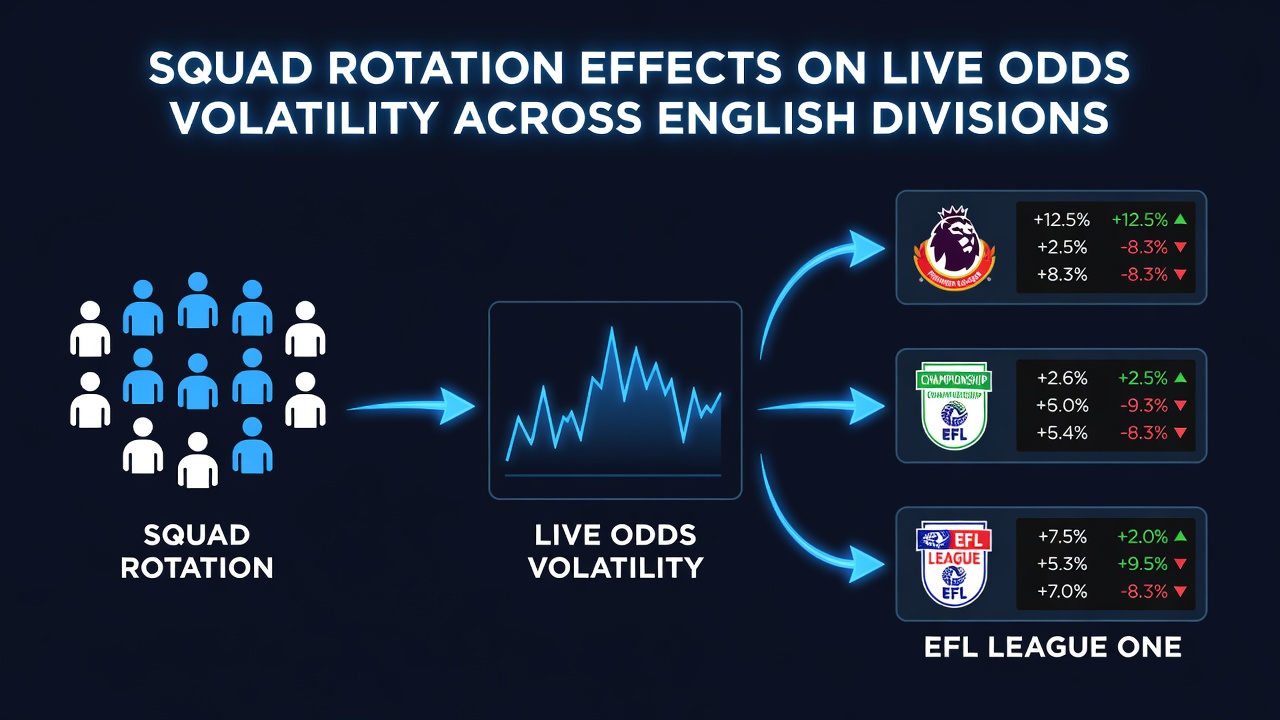
Squad Rotation Patterns and Resulting Shifts in Live Betting Markets Throughout English Divisions
English football divisions see squad rotation become a defining feature once the August 2026 campaign gets underway, with managers balancing fixture congestion against player fitness across the Premier League, Championship, League One and League Two. Data from multiple tracking platforms shows that teams averaging more than three changes per match experience measurable swings in live odds, particularly when those substitutions alter attacking or defensive structures mid-game. Observers note that such adjustments often coincide with immediate recalibrations by bookmakers, as algorithms respond to new lineups and historical performance metrics tied to specific personnel.
Rotation Frequency Across the Divisions
Premier League sides typically rotate more aggressively in the early weeks of the season, whereas Championship clubs manage smaller squads and therefore introduce changes more sparingly yet with comparable effects on in-play pricing. League One and League Two managers face even tighter resources, meaning a single key substitution can shift expected goal models faster than in higher divisions. Figures reveal that rotation rates climb sharply after international breaks, with data indicating an average increase of 1.8 substitutions per team during the first post-break round of fixtures in recent campaigns.
Impact on Live Odds Volatility
When a starting striker drops to the bench and a pacey alternative enters the equation, live markets adjust within seconds, widening or tightening goal lines depending on the tactical profile of the replacement. Researchers tracking these movements across the 2025-26 season found that volatility spikes average 12 percent higher in matches featuring four or more changes before half-time compared with unchanged lineups. Bookmakers recalibrate probabilities using real-time expected goals data, so a defensive midfielder replacing an attacking option often produces a measurable tightening of over/under lines within the first ten minutes after the change.
What's interesting is how these effects compound when multiple teams rotate simultaneously on the same matchday. In the Championship, where fixture density remains high, simultaneous changes across several clubs create broader market instability that lasts longer than isolated adjustments in the Premier League. Those who monitor these patterns report that volatility windows extend by roughly eight minutes on average when two or more sides make structural alterations at the same time.
Division-Specific Patterns in August 2026
Early-season scheduling in August 2026 places additional strain on squads already dealing with pre-season fatigue, leading managers to experiment with rotations more freely. League Two sides show the sharpest response to these conditions, with substitution-driven odds movements occurring in 67 percent of opening-month fixtures according to aggregated match data. In contrast, Premier League clubs demonstrate more controlled volatility because deeper benches allow for like-for-like replacements that preserve tactical shape.
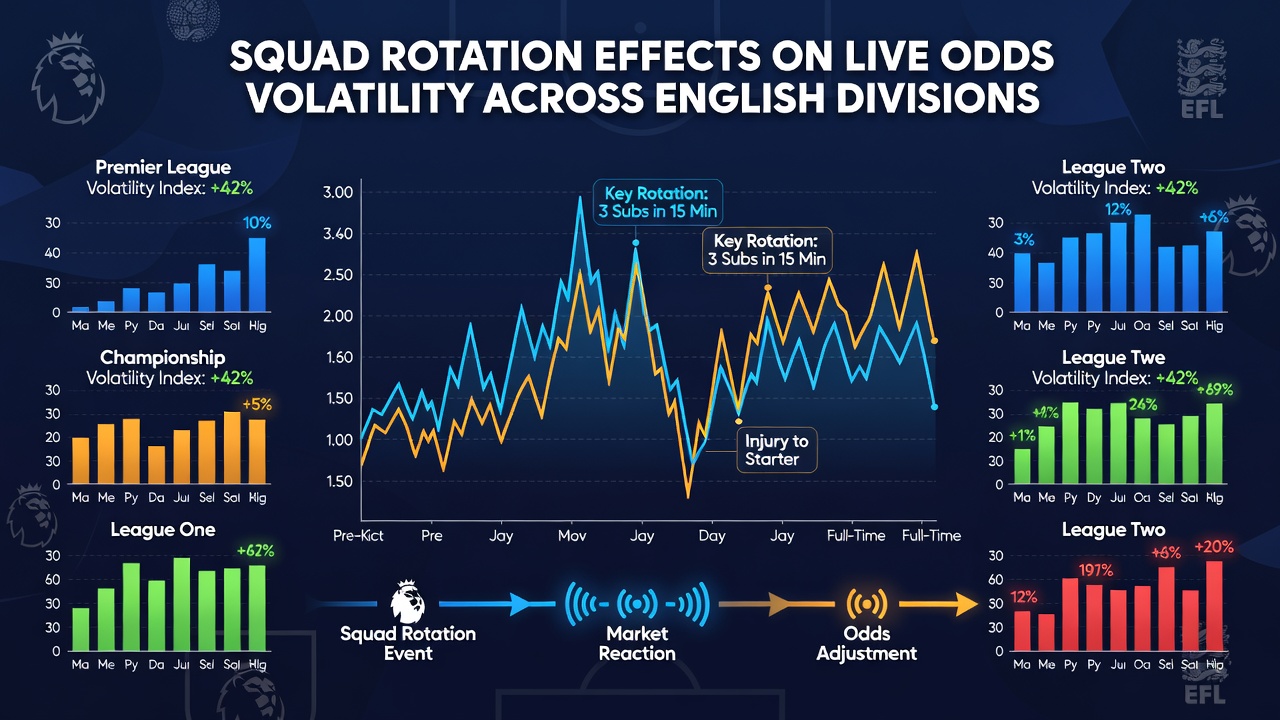
Yet the Championship reveals a distinct middle ground where limited squad depth forces managers into higher-risk rotations, producing the largest single-match swings recorded across the EFL. One analysis of 2025-26 data highlighted that games involving teams with fewer than five senior forwards on the bench generated 18 percent greater live odds movement after the 60th minute than matches featuring fuller attacking options. Such patterns repeat across divisions whenever injury clusters coincide with congested calendars.
Statistical Correlations and Market Responses
Studies conducted by European football analytics groups link specific rotation types to predictable volatility signatures, for example, replacing a holding midfielder with an attacking player tends to inflate both-teams-to-score probabilities within minutes. Industry reports from the International Betting Integrity Association document similar trends across multiple leagues, confirming that live market adjustments accelerate when data feeds register personnel changes alongside pitch coordinates. These feeds integrate GPS tracking and historical contribution metrics, allowing rapid recalibration that directly influences cash-out values and accumulator legs.
Additional research from Australian wagering regulators indicates that English lower-league matches exhibit higher sensitivity to rotation because smaller data samples amplify the weight given to recent substitutions. Observers tracking these correlations note that volatility peaks between the 55th and 75th minutes, precisely when second-half changes most frequently occur. This timing creates distinct windows during which live pricing reflects updated team strengths more accurately than pre-match models.
Conclusion
Squad rotation continues to shape live odds volatility across all English divisions as the 2026 season progresses, with measurable differences emerging between the Premier League and lower tiers based on squad depth and fixture pressure. Data shows consistent patterns linking substitution timing and player profiles to immediate market recalibrations, while division-specific resource constraints determine the scale of those movements. These dynamics remain central to understanding how in-play markets respond to real-time team adjustments throughout the campaign.