Referee Rotations Influence Live Booking Markets Across Football Divisions
Alex Peters · Aug 10, 2026
Referee Rotations Influence Live Booking Markets Across Football Divisions
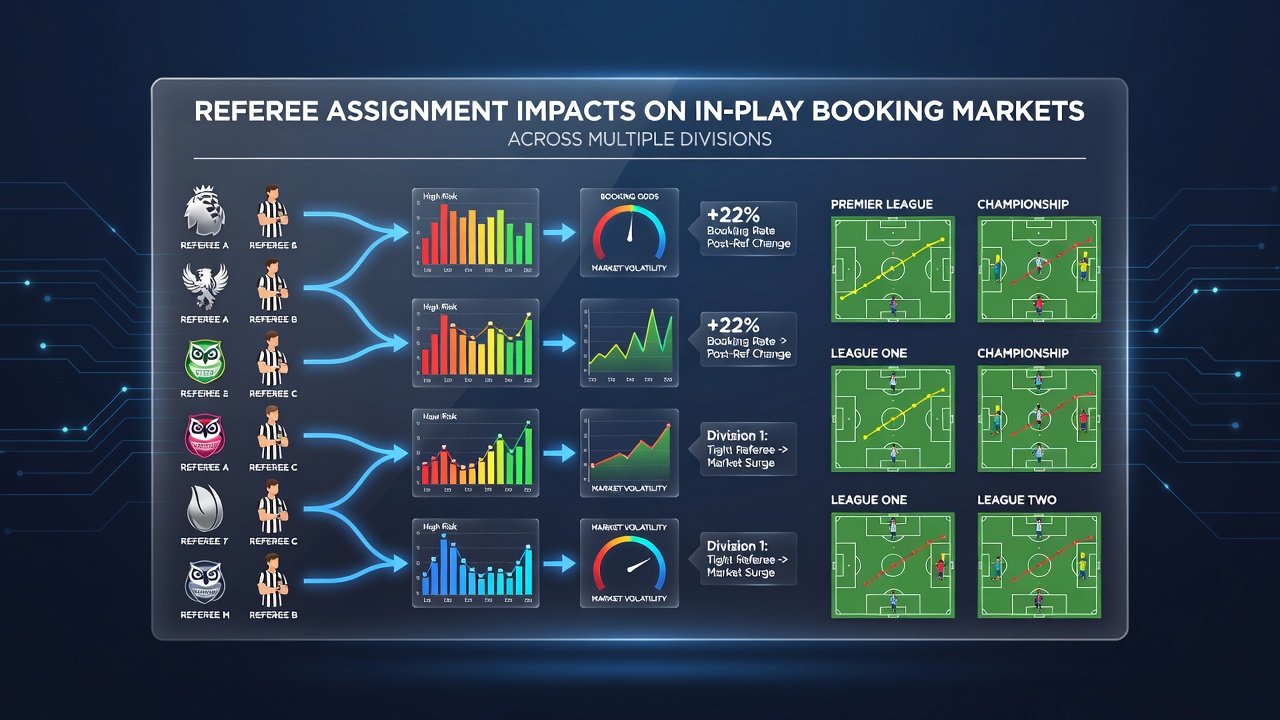
Referee assignments shape in-play booking markets because officials carry distinct patterns in card issuance that betting platforms track and adjust for across the Premier League, Championship, League One and League Two. Data compiled at the start of the 2026/27 season shows that certain referees average 4.8 yellow cards per game while others sit closer to 3.2, creating measurable differences in live odds that traders monitor from kick-off.
Leagues publish referee schedules weeks in advance, allowing markets to price in historical tendencies before matches begin. When a high-card official receives an assignment in the Championship, for example, opening lines for over 4.5 bookings often move within minutes of the announcement. In lower divisions the effect appears even more pronounced because match volatility increases and fewer resources exist for teams to adapt tactics mid-game.
Tracking Official Patterns Through Multiple Seasons
Statistical services collect card data by referee, venue and competition, revealing consistent clusters that operators incorporate into models. One study covering the 2023 to 2026 period found referees who issue cards early in matches tend to maintain elevated rates through the second half, whereas those who start conservatively rarely accelerate later. These patterns hold across divisions even when team styles differ, which explains why in-play platforms refresh booking lines after each card rather than waiting for half-time.
August 2026 fixtures provide fresh data points as newly promoted sides encounter officials they rarely face in previous campaigns. Early-season matches between Championship and League One clubs have already produced booking totals that deviate from pre-match expectations when lesser-known referees draw assignments. Observers note that these deviations create brief windows where live odds lag behind actual card accumulation rates.
Division-Specific Responses to the Same Officials
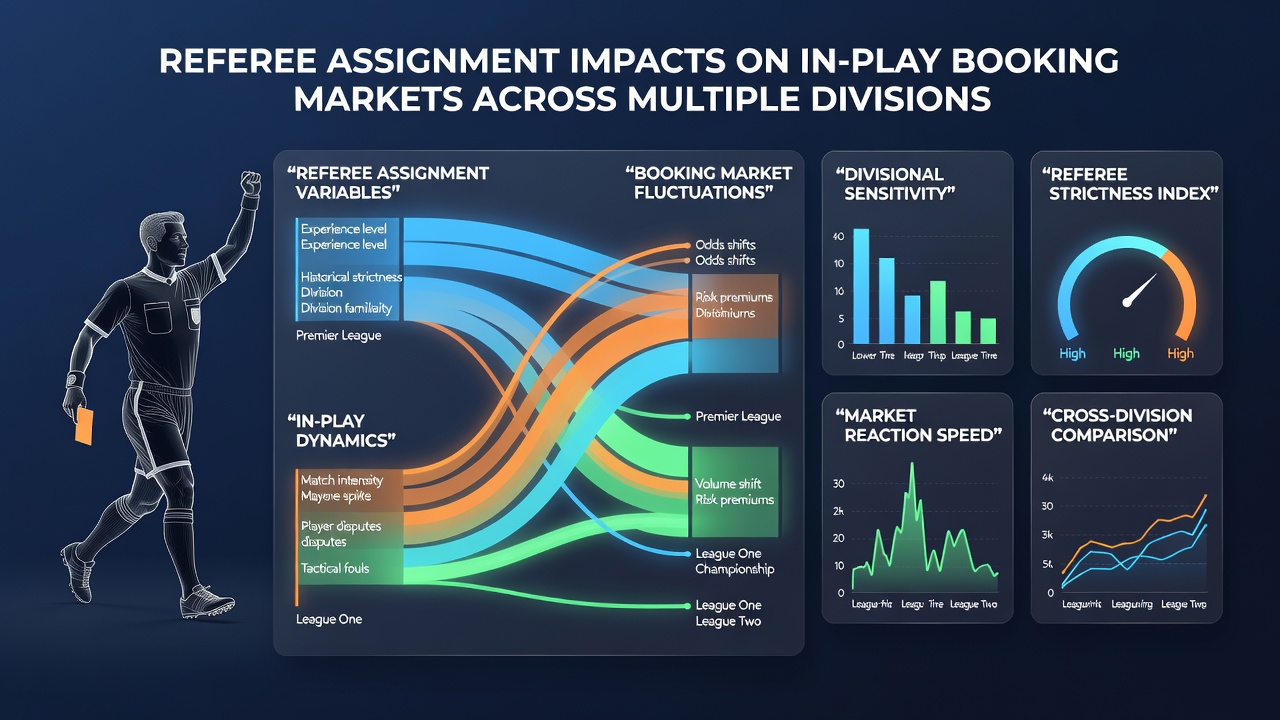
Premier League markets react faster to referee announcements because liquidity remains high and automated systems adjust spreads within seconds. Championship and League One markets move more slowly, yet the percentage shift in over/under lines can prove larger because baseline card averages sit higher in those divisions. League Two fixtures show the widest variance, with some referees posting card rates that differ by more than two cards per game depending on whether the match occurs midweek or at the weekend.
Teams that receive frequent yellow cards under particular officials sometimes alter pressing intensity once the assignment becomes public. Data from the opening weeks of the 2026/27 season indicates such adjustments reduce total cards in roughly 35 percent of cases, though the effect diminishes in lower divisions where squad depth limits tactical flexibility. In-play traders therefore watch both the referee and the teams' historical response rates when updating lines after the first booking.
Technology and Real-Time Data Integration
Video review systems and pitch-side monitors allow referees to issue cards with greater consistency, yet the underlying decision thresholds still vary by individual. Platforms integrate these variables into algorithms that recalculate probabilities after every incident, incorporating time remaining, scoreline and historical referee behaviour. According to figures released by FIFA technical reports, global referee training programmes have narrowed some of these differences, though regional variations persist across domestic leagues.
Additional research from the Australian Institute of Criminology examined how betting markets incorporate officiating data in multiple sports and found that football card markets adjust more rapidly than equivalent markets in rugby or basketball. The study attributed the speed partly to the volume of matches and the granularity of referee statistics available to operators.
Conclusion
Referee assignments continue to drive measurable movements in live booking markets because historical card rates provide reliable inputs that platforms refresh with each new fixture. Across the Premier League through to League Two, the same officials produce different totals depending on division, time of season and team response patterns. As the 2026/27 campaign progresses, operators and analysts maintain detailed referee profiles that update after every round, ensuring in-play lines reflect the latest assignment data rather than generic league averages.