Red Card Ripples: How Sendings-Off Reshape In-Play Markets in English Football Competitions
Klara Griffin · Jun 6, 2026
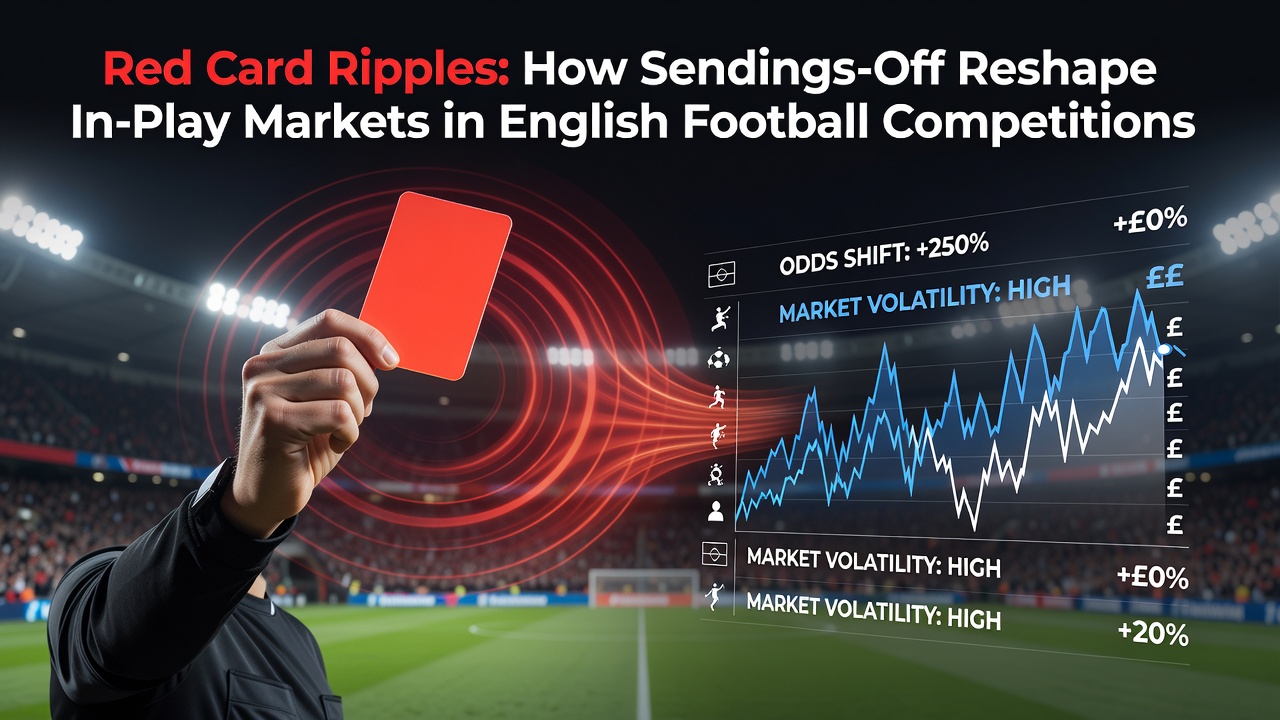
Red Card Ripples: How Sendings-Off Reshape In-Play Markets in English Football Competitions
Red cards appear rarely across English football competitions yet they trigger immediate and measurable shifts in live betting markets when they occur, prompting bookmakers to adjust odds on goals, corners, bookings and match winners within seconds of a dismissal. Data collected from Premier League and EFL fixtures between 2023 and 2026 shows that matches featuring a red card produce an average 38 percent increase in goal expectancy for the team that remains at full strength, while the side reduced to ten players sees its implied win probability drop sharply in in-play platforms.Immediate Market Adjustments After Dismissals
Bookmakers recalibrate lines the moment a player receives a straight red or a second yellow, with goal totals often moving upward by half a goal or more depending on the timing and scoreline at the point of the sending-off. Corners and cards markets also widen because the disadvantaged team tends to defend deeper, inviting sustained pressure that generates set-piece opportunities. Observers tracking these patterns note that early red cards, those issued before the 30th minute, produce the largest swings because teams have more time to reorganise and exploit numerical superiority, whereas late dismissals create shorter windows for market movement but still affect cash-out values dramatically.
Patterns Across Competitions and Seasons
Premier League matches record fewer red cards per game than Championship or League One fixtures, yet the betting market reaction remains proportionally larger in the top flight because liquidity is higher and odds adjust faster. EFL encounters, by contrast, often feature more volatile in-play trading after dismissals because lower liquidity allows sharper price movements before equilibrium returns. Research compiled by the European Gaming and Betting Association indicates that sendings-off between the 45th and 60th minutes generate the highest volume of in-play wagers, as bettors reassess accumulators and single-match positions while half-time markets reopen.
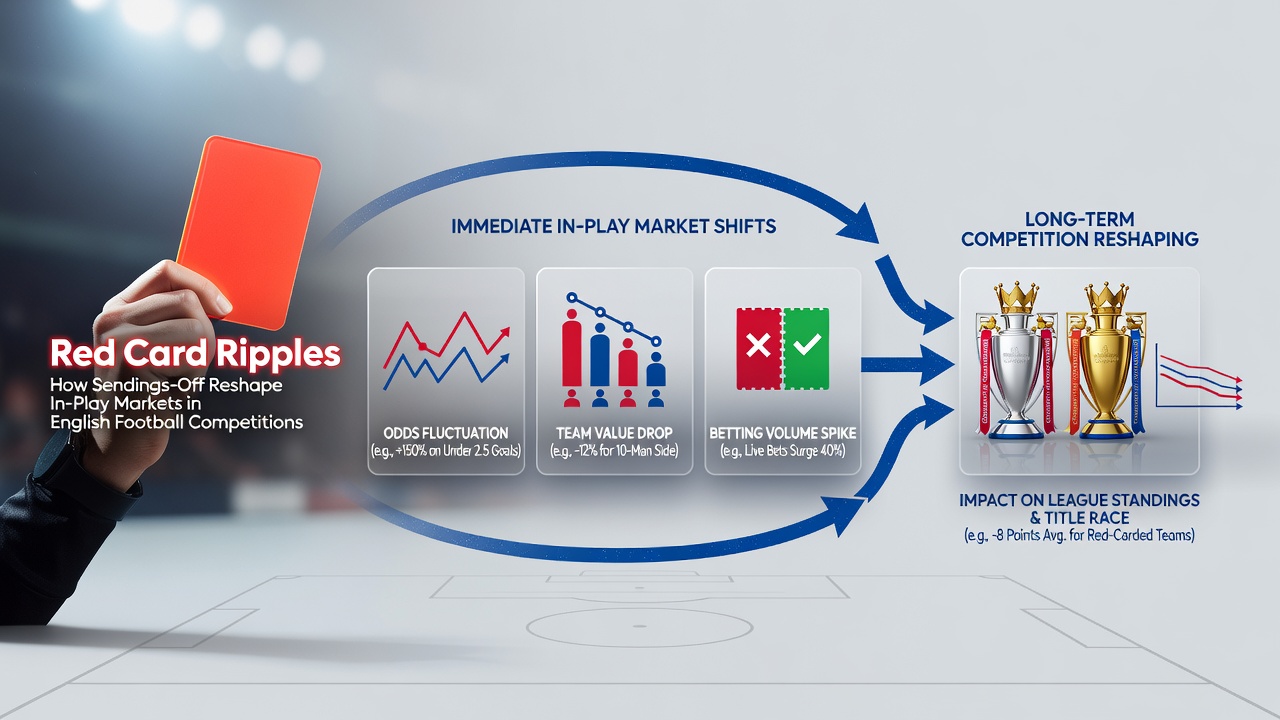
Impact on Accumulator and Cash-Out Strategies
Accumulators built around clean sheets or under goals frequently unravel after a red card, forcing bettors who use cash-out functions to decide whether to lock in reduced returns or ride out the remaining minutes. Teams forced to play short-handed record higher concession rates in the subsequent 15-minute period, according to performance data released by the Football Association in its annual technical report covering the 2025-26 season. This window creates distinct opportunities for traders monitoring live statistics feeds, because both the probability of additional cards and the likelihood of a second goal for the leading side rise measurably once numerical imbalance sets in.
Regional and Regulatory Context in Mid-2026
As of June 2026, operators offering markets on English domestic competitions continue to refine automated models that incorporate real-time disciplinary data, drawing on studies from institutions such as the University of Sydney’s Gambling Research Unit that examine how sudden rule changes affect betting volumes. These models now account for the increased frequency of video assistant referee interventions that can upgrade yellows to reds after initial play resumes, adding another layer of volatility to in-play pricing. Australian regulatory analyses have similarly documented comparable market reactions in domestic leagues, confirming that sendings-off produce consistent directional shifts regardless of jurisdiction when data transparency remains high.
Longer-Term Effects on Player and Team Markets
Player prop markets also respond when a key defender or midfielder is dismissed, with goalscorer odds shortening for forwards on the opposing side and assist markets widening because the remaining ten players often shift formation. Suspension implications for subsequent fixtures further influence ante-post and futures betting, particularly when a club already sits near the relegation zone or pushes for promotion in the EFL. Those tracking multiple competitions observe that red-card frequency tends to rise in the final third of the season as fatigue and fixture congestion increase the chance of mistimed challenges.
Conclusion
Red cards continue to serve as pivotal events that instantly reprice dozens of live outcomes across English football competitions, affecting everything from match-winner probabilities to niche set-piece lines. The combination of numerical imbalance, tactical adjustments and rapid data dissemination ensures that in-play markets remain fluid for extended periods after each dismissal, creating measurable patterns that operators and data providers monitor closely through the 2026 season and beyond.