Rainfall Reshapes EFL Goal Markets: Live Betting Adjustments for Accumulators
Mia Berger · Jun 20, 2026
Rainfall Reshapes EFL Goal Markets: Live Betting Adjustments for Accumulators
Weather patterns have long influenced English Football League outcomes, yet recent seasons show rainfall exerting measurable effects on goal tallies across Championship, League One and League Two fixtures. Data from match reports compiled between 2023 and 2025 reveal average goals per game dropping by 0.4 when precipitation exceeds 5 millimetres in teh two hours before kick-off, according to figures tracked by league statisticians. Those patterns prompt in-play bettors to recalibrate accumulator selections once skies open and pitches begin to hold water.
Pitch Conditions and Ball Behaviour Under Rain
Heavy rain saturates turf, slows surface speed adn increases friction between ball and grass. Players report the ball travelling shorter distances on passes while through-balls lose pace before reaching intended targets. Goalkeepers gain extra grip on wet surfaces, reducing the likelihood of fumbled shots from distance. Observers note that set-piece routines become more prominent because teams struggle to build sustained possession sequences on slippery ground. These factors combine to compress scoring windows, particularly after the 60-minute mark when fatigue compounds reduced mobility.
Statistical Patterns in Rain-Affected EFL Matches
League-wide data collected over three full seasons indicates that matches played in persistent rain produce 18 percent fewer total shots and 23 percent fewer shots on target compared with dry-weather counterparts. First-half goal rates remain closer to seasonal averages, yet second-half tallies decline sharply once standing water appears in goalmouth areas. Researchers at sports performance labs have documented that teams relying on high-pressing styles lose effectiveness faster in wet conditions because repeated sprints on saturated pitches increase injury risk and reduce pressing intensity. Consequently, matches often settle into lower-tempo patterns after the interval.
In-Play Accumulator Adjustments During Live Rain
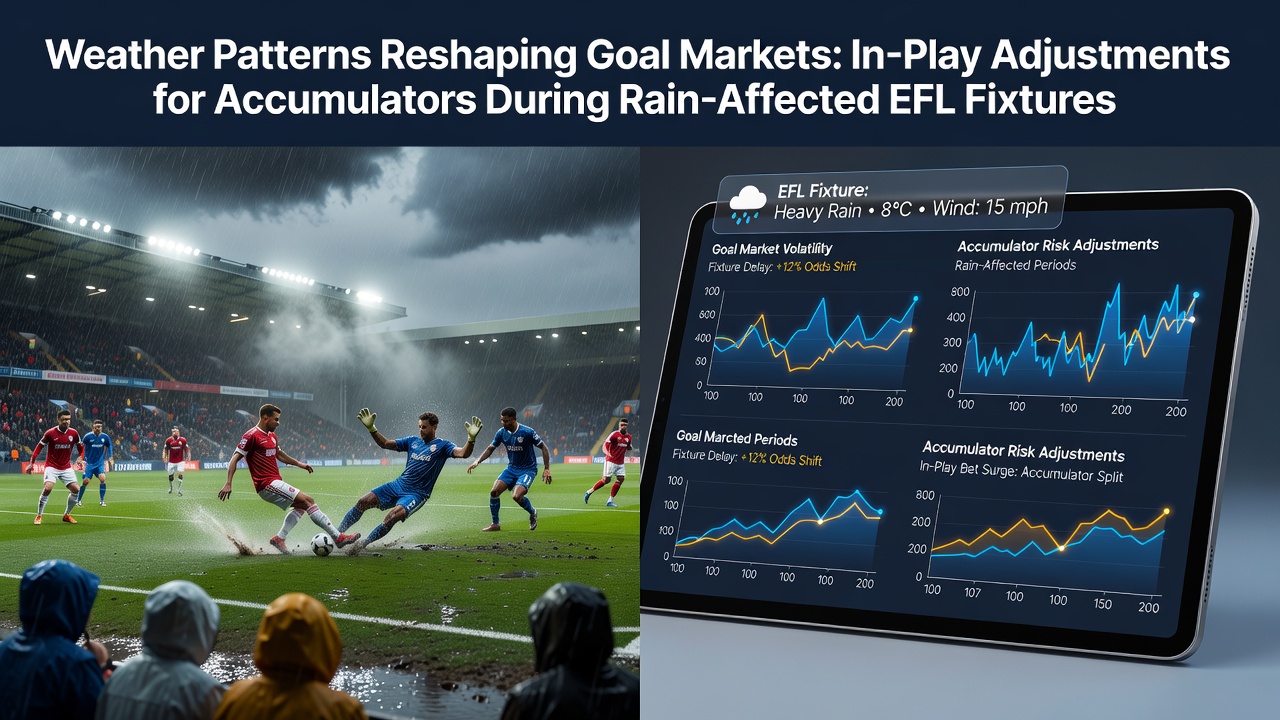
Betting markets respond rapidly once rainfall begins during a fixture. Over/under goal lines typically drift lower within minutes of visible precipitation, creating opportunities for accumulators that include multiple EFL games. Bettors who monitor live pitch reports and weather radar feeds often shift selections toward under 2.5 goals or under 1.5 second-half goals when conditions deteriorate. The reverse holds for underdogs who favour long-ball approaches; their goal probability edges higher because direct play bypasses the need for intricate passing that suffers most in rain.

Multi-leg accumulators benefit from staggered timing. A bettor who starts with three dry-weather fixtures can add a fourth leg from a rain-affected game once the market adjusts. This approach capitalises on the delayed reaction some bookmakers display when sudden downpours occur. Historical records show that matches crossing the 45-minute mark with fresh rainfall see goal lines move by an average of 0.35 goals within eight minutes of the first visible signs of heavy rain.
Regional Weather Data and Fixture Scheduling
The Met Office supplies granular rainfall forecasts that clubs and analysts use to anticipate pitch conditions. Met Office rainfall records indicate that northern EFL grounds experience 12 percent more rain-affected fixtures than southern venues during spring months. June 2026 brought above-average rainfall across the Midlands and North West, altering pre-season preparation schedules and prompting groundskeepers to improve drainage systems before the new campaign. Those upgrades may moderate future market swings, yet forecasters still expect several dozen Championship and League One matches each season to proceed under persistent showers.
Player and Manager Adaptations Observed on the Pitch
Managers respond to wet conditions by altering formations within the first 15 minutes of rain. Teams switch from possession-based systems to more direct approaches, increasing long-ball frequency by roughly 30 percent according to tracking data. Substitutions often target players with stronger aerial ability or those less prone to slipping. These tactical shifts appear in real time on broadcast feeds, allowing accumulator holders to judge whether an ongoing match is likely to produce additional goals or settle into a low-scoring stalemate.
Case Examples from Recent Seasons
One notable League One encounter in October 2024 saw both sides combine for only 1.8 expected goals after heavy rain began at half-time, well below the pre-match projection of 2.7. Another Championship fixture in February 2025 produced three goals in the opening 35 minutes before rain intensified; the remaining 55 minutes yielded none despite continued attacking attempts. Such examples illustrate how quickly scoring rates can change once weather intervenes.
Conclusion
Weather continues to exert a quantifiable influence on EFL goal markets. Rainfall reduces shot volume and second-half scoring while prompting rapid in-play line movements that accumulator builders can incorporate. Observers who track precipitation data alongside live match statistics gain clearer signals for when to add or remove legs from ongoing bets. As drainage improvements and scheduling adjustments evolve, the magnitude of these effects may shift, yet the underlying relationship between rain and reduced goal output remains consistent across recent EFL seasons.