Rain-Soaked Turf Forces Fresh Timing Calls for Accumulator Builders in EFL Fixtures
Klara Griffin · Jun 3, 2026
Rain-Soaked Turf Forces Fresh Timing Calls for Accumulator Builders in EFL Fixtures
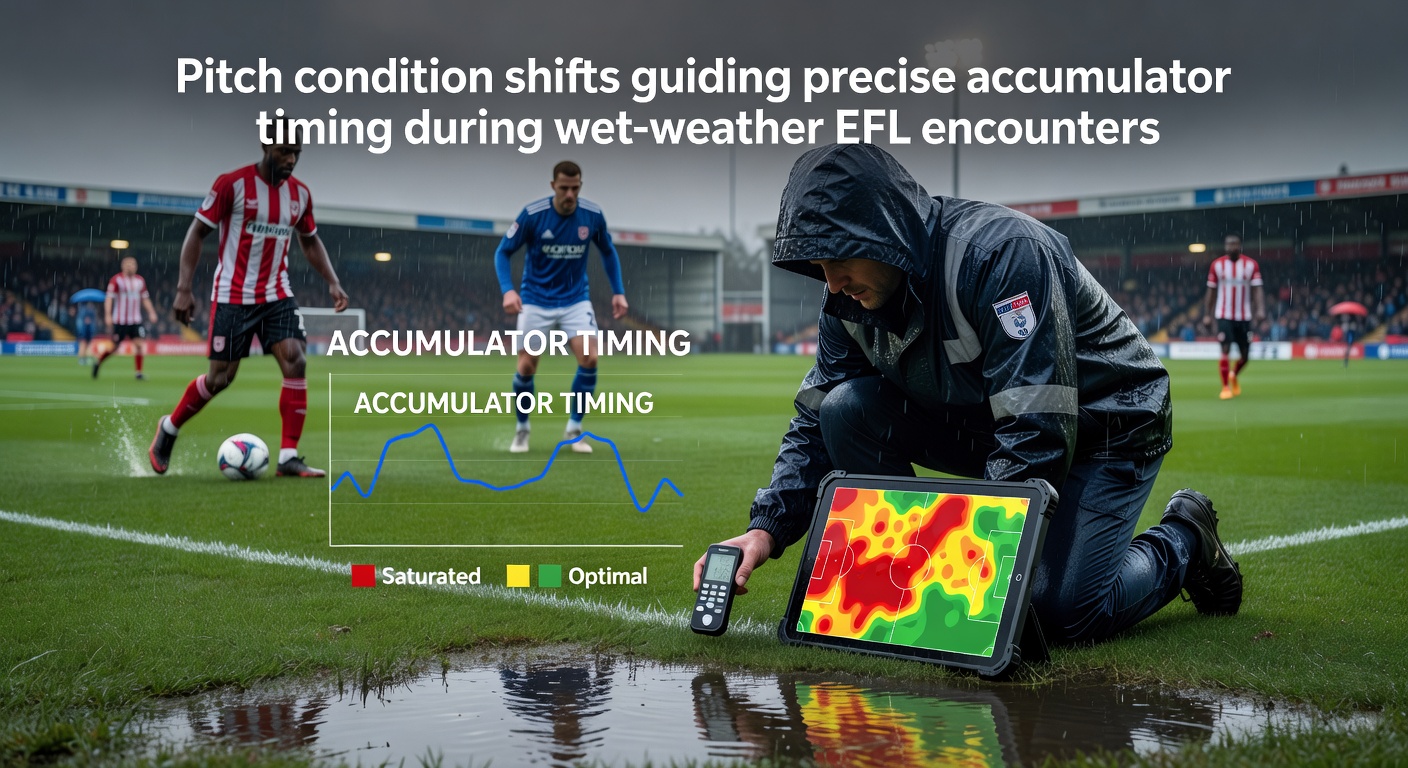
Weather fronts sweep across EFL grounds each season and transform playing surfaces within minutes, so observers track moisture levels closely when they build live accumulators. Pitch drainage systems vary between League One and Championship venues, while rainfall intensity alters ball roll and player footing at different rates. Those who monitor these shifts often identify narrow windows where underdog teams gain unexpected edges or favorites lose control.
Moisture Levels Alter Ball Behavior and Player Movement
Water saturation changes how the ball travels across grass, and data from multiple seasons shows passes complete at lower rates once grounds exceed certain saturation thresholds. Defenders slip more often on saturated surfaces, which opens lanes for attackers who adapt their runs, and this pattern repeats across several clubs that play on older drainage networks. Researchers at sports performance centers have documented average speed reductions of up to fifteen percent in the first fifteen minutes after heavy rain begins, giving teams that press high an early advantage before both sides adjust.
Live Data Streams Reveal Exact Windows for Accumulator Adjustments
Modern tracking systems feed real-time metrics on ground friction and player acceleration directly to analysts, and these numbers help pinpoint when a match tilts toward overs or unders. One Championship side recorded four additional shots on target in the twenty-minute spell after a downpour because the opposition back line struggled with traction, while the same fixture later produced fewer goals once the surface stabilized. Accumulator builders who watch these metrics often add or remove legs before the next goal changes odds sharply.
Case Examples Show Pattern Repetition Across Divisions
Take a League Two encounter from the 2024-25 campaign where persistent rain turned the pitch into a quagmire by half time, and the away side scored twice in the opening ten minutes of the second half before the home team settled. Similar sequences appeared in three other fixtures that season on comparable surfaces, according to match reports compiled by the English Football League. Observers note that these bursts often coincide with drops in completed tackles, which creates measurable spikes in expected goals for the trailing side.
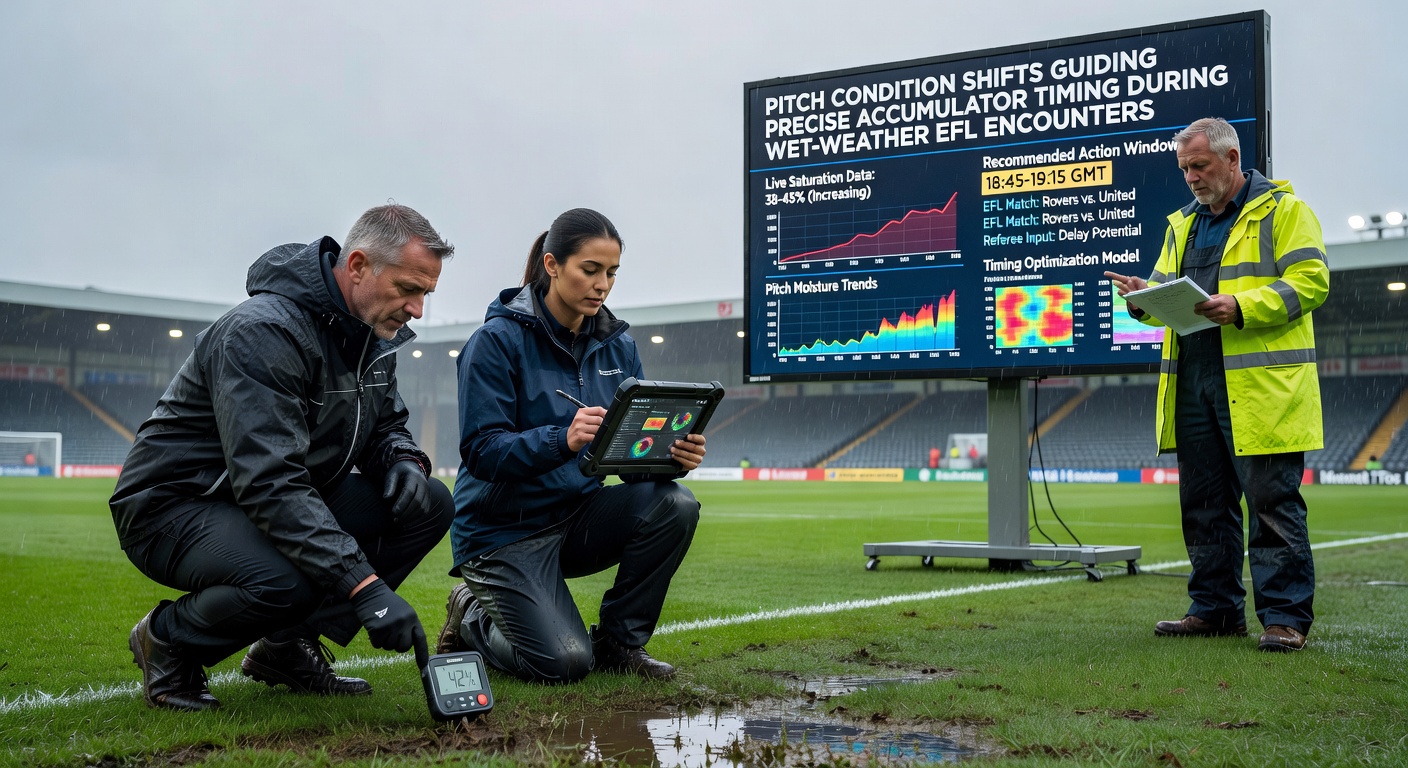
Coaches sometimes delay substitutions until the surface firms slightly, and this hesitation produces predictable slowdowns in tempo that affect over-and-under markets. Data collected across thirty wet-weather games last season indicated that teams with stronger set-piece routines scored twenty-two percent more often once the ball became heavier, because longer passes and crosses held their line better than short combinations.
External Factors Compound Pitch Effects in June 2026 Fixtures
Play-off matches scheduled near the end of the 2025-26 season may encounter late spring storms, and grounds staff at several neutral venues have upgraded drainage ahead of those dates. A study published through the Sports Science Institute examined how temperature and rainfall interact on natural grass, and its findings suggest that warmer June evenings allow surfaces to recover faster than in winter months. This recovery speed changes the length of any momentum window, so those constructing accumulators must recalculate expected goal models more frequently during evening fixtures.
Another report from the Human Kinetics research archive tracked player workload metrics on wet pitches and found that fatigue sets in earlier for sides that rely on high pressing, which opens second-half opportunities for counter-attacking teams. These workload spikes appear consistently across League One and League Two, where squad depth is thinner and rotation options remain limited.
Conclusion
Shifting pitch conditions continue to supply measurable signals that shape accumulator timing decisions throughout the EFL calendar. Teams, analysts, and data platforms all respond to the same physical changes on the field, and those responses create recurring patterns visible in match statistics. Observers who integrate drainage reports, rainfall forecasts, and live friction data therefore gain clearer sightlines into when markets move most sharply during wet-weather encounters.