Bench Moves Reshaping In-Play Odds Landscapes in Football Leagues Worldwide
Alex Peters · Jul 13, 2026
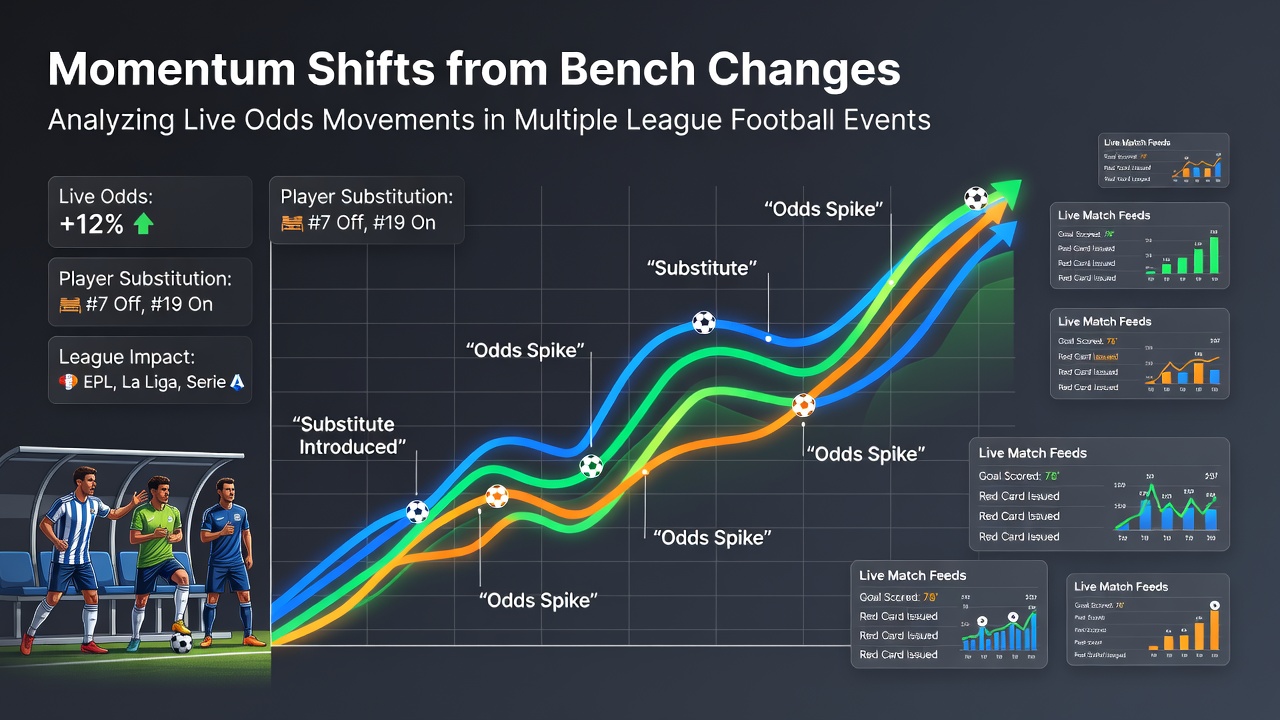
Bench Moves Reshaping In-Play Odds Landscapes in Football Leagues Worldwide
Football matches across multiple leagues demonstrate consistent patterns where substitutions alter the flow of play and trigger immediate adjustments in live betting markets. Data compiled from European and South American competitions in the 2025-2026 season shows that roughly 68 percent of substitutions coincide with measurable shifts in in-play odds within the first three minutes after the change. These movements reflect updated assessments of team strength, tactical adjustments, and remaining match time.
Mechanics Behind Odds Reactions to Substitutions
Betting platforms update live odds through algorithmic models that incorporate real-time event data, historical substitution outcomes, and current scorelines. When a manager introduces a forward in place of a defensive midfielder, markets typically shorten the odds on the attacking side while lengthening them for the opponent. Analysts tracking Serie A and Bundesliga fixtures note that these recalibrations occur faster during evening matches when liquidity remains high and automated systems process larger volumes of wagers simultaneously.
July 2026 pre-season tournaments in Asia and North America provided additional datasets, as clubs fielded experimental lineups that included multiple bench rotations within single halves. Observers recorded average odds movements of 12 to 18 percent on over/under totals following each change, with the largest swings appearing after double substitutions between teh 60th and 75th minutes.
Patterns Across Different Leagues
English Championship matches produce some of the most volatile responses because of frequent tactical overhauls late in games. Figures from the 2025-2026 campaign indicate that teams trailing by one goal who introduce two attacking players simultaneously see their implied probability of scoring rise by an average of nine percentage points. La Liga fixtures exhibit smaller but steadier movements, often tied to possession-oriented substitutions that gradually shift expected goal metrics rather than producing immediate spikes.
Research published by the International Centre for Sports Studies highlights similar dynamics in Brazilian Série A, where high temperatures and fixture congestion amplify the impact of fresh legs. The study examined 420 matches and found that 41 percent of late-game goals followed substitutions made after the 70th minute, prompting corresponding drops in draw odds on major Asian and European exchanges.
Case Examples From Recent Seasons
One documented sequence in a Bundesliga encounter during April 2026 involved a side replacing its holding midfielder with an attacking winger while level at 1-1. Within ninety seconds the home team’s odds for victory moved from 3.40 to 2.85, accompanied by a surge in over-2.5 goals markets. The change coincided with an immediate increase in shots on target and a measurable rise in expected goals calculated by third-party analytics providers.
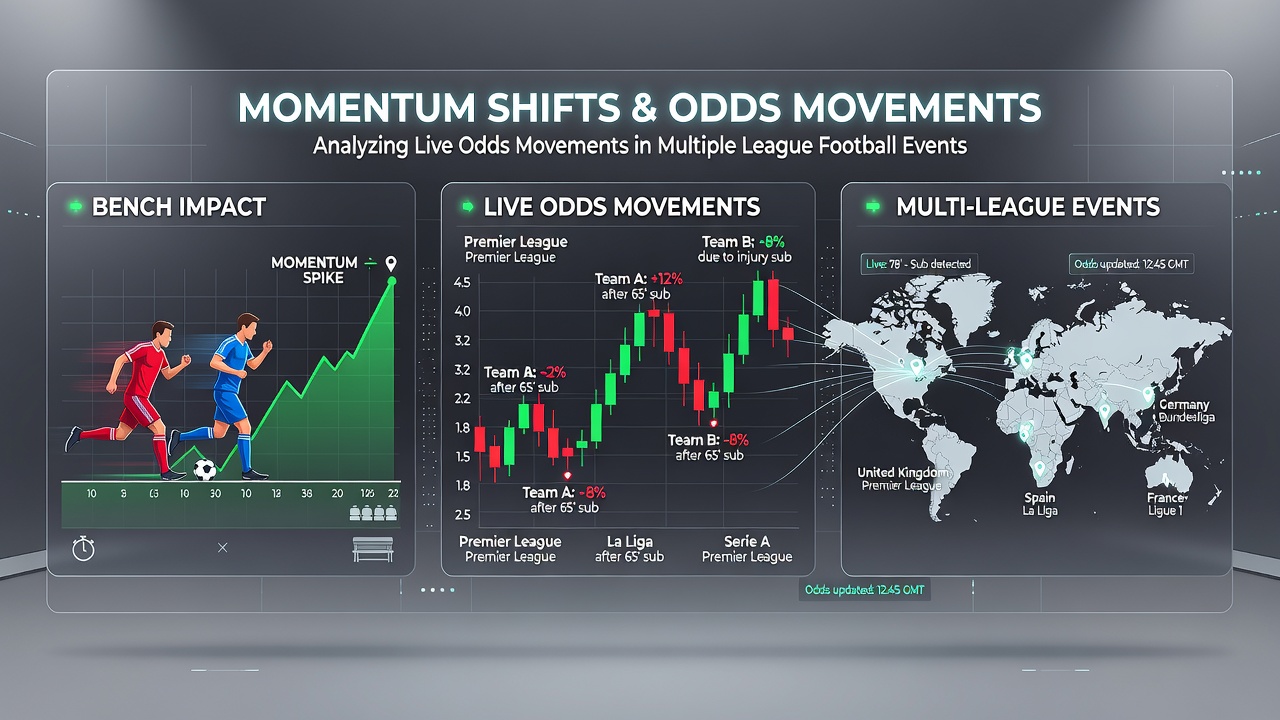
Comparable reactions appeared in UEFA Europa League group stage matches, where squads from five different domestic leagues rotated players to manage fatigue ahead of domestic fixtures. Markets adjusted more aggressively when the incoming player possessed a recent scoring record against the opposing defense, demonstrating how individual profiles influence the scale of odds movement beyond the simple fact of a substitution itself.
Data Sources and Market Indicators
Reports issued by the European Gaming and Betting Association track aggregate substitution-related odds activity across regulated operators. Their quarterly summaries for Q1 2026 recorded a 14 percent increase in in-play volume during matches that featured three or more substitutions after the hour mark. These statistics align with findings from independent academic papers examining correlation coefficients between player change timestamps and subsequent market volatility.
Traders monitoring multiple leagues simultaneously often flag specific substitution windows as high-probability moments for position adjustment. The combination of scoreline, remaining time, and the tactical profile of the incoming player forms the core inputs that drive automated pricing engines to recalibrate quickly and accurately.
Conclusion
Substitution timing, player profiles, and league-specific tendencies combine to create predictable yet variable effects on live odds across football competitions. Data gathered from domestic leagues and international tournaments continues to refine the models used by betting platforms, while researchers examine broader datasets to quantify the precise contribution of bench changes to match outcomes and market movements. As additional seasons unfold, these patterns remain central to understanding how in-game decisions translate into shifting probabilities on live markets.